Cleaning Tips · Pressure Washing
A pressure washing guide for Florida homes and businesses has to start with our climate: a paradise for mildew, algae, and black streaks. Pressure washing is how you fight back, but using too much pressure on the wrong surface does real damage. Here's how to clean exteriors the right way in Central Florida.
By Joey Maher, Owner, Orchid Cleaning Service, Winter Haven, FL.
Reviewed for quality by Beverly Hughes, Commercial Operations Lead.
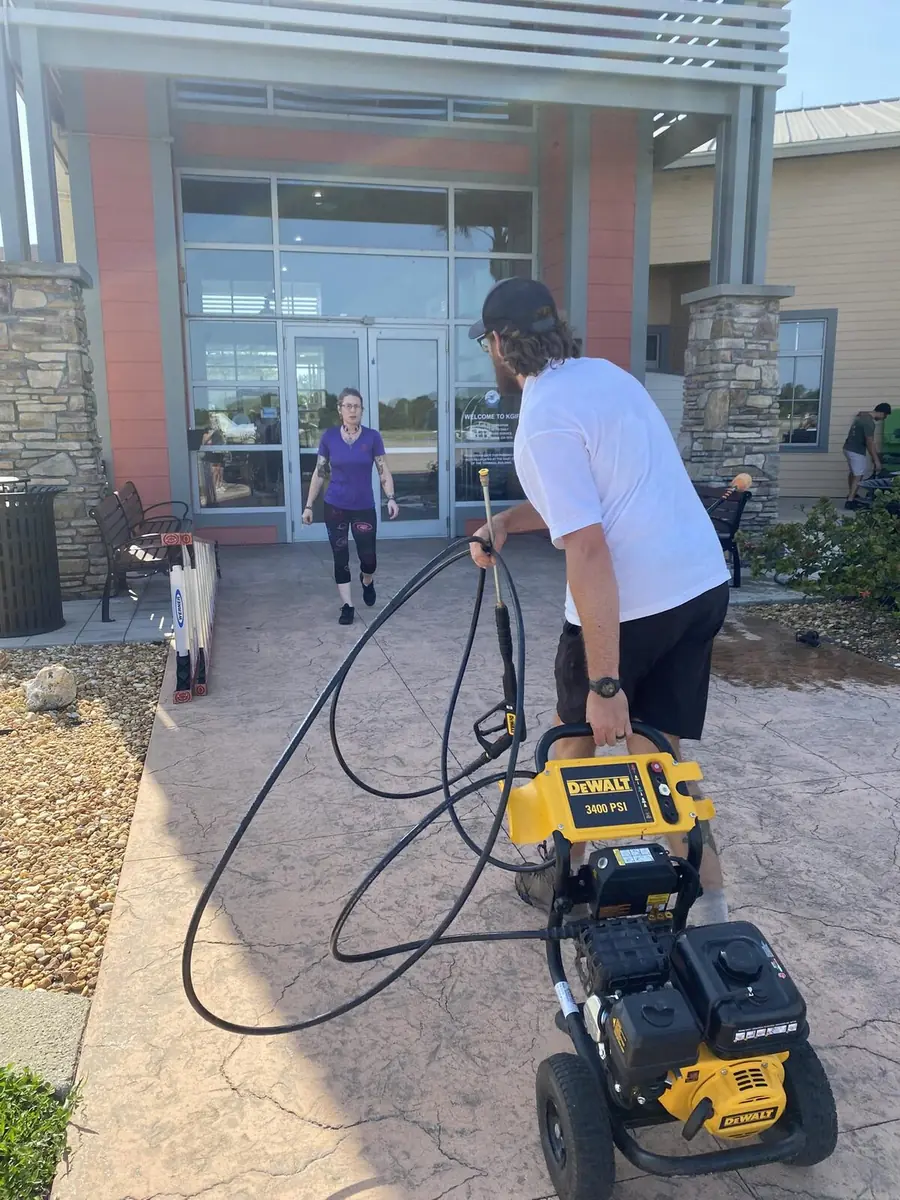
This is the distinction that saves your property. Pressure washing uses high-pressure water and suits hard, durable surfaces. Soft washing uses low pressure plus a cleaning solution to kill mildew and algae at the root, and it's what delicate surfaces actually need. Use the wrong one and you etch concrete, splinter wood, or blast water behind your siding.
Most damage we're called to look at wasn't caused by the machine. It was caused by the wrong pressure or the wrong tip held too close. Use this as a starting point and always test an out-of-the-way patch first:
| Surface | Pressure | Nozzle | Notes |
|---|---|---|---|
| Concrete driveway / sidewalk | 2,500–3,000 PSI | 25° (green), or a surface cleaner | A rotary surface cleaner prevents the "zebra stripe" wand marks |
| Brick & pavers | 1,500–2,000 PSI | 25–40° | High pressure blasts out joint sand; plan to re-sand pavers after |
| Vinyl / painted siding | Soft wash (<500 PSI) | 40° (white) or soaping tip | Spray downward, never up under the laps, where water enters the wall |
| Stucco & screen enclosures | Soft wash only | Soaping tip | Pressure cracks stucco and tears screens; let the solution do the work |
| Wood deck / fence | 500–1,200 PSI | 40°, kept moving | Go with the grain; anything stronger furs and splinters the boards |
| Shingle roof | Never pressure wash | N/A | Soft-wash solution only, applied by someone insured to be up there |
Those black streaks on north-facing walls and roofs are Gloeocapsa magma, an algae that thrives in our humidity. Rinsing alone won't stop it returning, which is why a cleaning solution matters. Schedule exterior cleaning before our summer rainy season, work in the cooler morning hours, and always pre-wet and protect nearby landscaping from any solution runoff.
Timing matters more here than almost anywhere else. From roughly June through September, Central Florida's near-daily afternoon storms mean a freshly washed surface can be re-splashed with mud the same day, and the humidity that follows feeds regrowth. The sweet spot is late winter through spring: you get the pollen film off, and surfaces stay clean through the season when you actually use your patio and lanai. Homes on lakes or under heavy oak canopy (a lot of Polk County) regrow algae faster and typically need exterior cleaning every 12–18 months rather than every two or three years.
One more local reality: many Polk County HOAs send violation letters over stained driveways and streaked roofs. A soft wash is dramatically cheaper than the roof replacement some homeowners fear the letter is about. The streaks are algae on the surface, not shingle failure.
Budget-wise, a rental machine runs about $60–$120 a day plus detergent, and a driveway is a solid half-day of hot work. That math is why many of our customers fold exterior concrete into a bigger visit, for example alongside a deep clean of the interior, or a post-construction cleanup where the driveway took a beating from trades' trucks and mortar wash-out.
Anything involving a roof, a ladder, two-story walls, or a chemical soft-wash mix is a job for trained, insured crews, both for the result and for safety. For commercial properties, regular exterior cleaning isn't just curb appeal; slippery algae on walkways is a real liability, and dumpster pads and entryways are the first thing customers (and health inspectors) see. Exterior washing is part of our commercial cleaning and office cleaning programs across Polk County. You can see the kinds of properties we maintain on our commercial work page.
Orchid offers pressure washing and soft washing for sidewalks, building exteriors, and dumpster pads as part of our commercial cleaning services across Polk County.
Get a free quote →More cleaning tips
→ Spring Deep Cleaning Checklist for Florida Homes
→ Post-Construction Cleaning Checklist for New Builds & Renovations
→ How to Stop Mold & Mildew in a Florida Home
→ How to Get Streak-Free Windows Every Time
→ How to Deep Clean Your Kitchen Appliances
→ How to Clean AC Vents and Improve Indoor Air Quality
→ Hurricane Prep & Cleanup Guide for Polk County Homes
→ How We Train and Vet Our Cleaners
→ Back to all cleaning tips