Cleaning Tips · Seasonal
Hurricane prep and cleanup are a fact of life for anyone who owns a home in Central Florida. The season runs June through November, and a storm can turn from "watch" to "warning" in a couple of days. A little preparation protects your home, and knowing how to clean up safely afterward gets your family back to normal faster. Here's our practical, Polk County checklist for before and after the storm.
By Joey Maher, Owner, Orchid Cleaning Service, Winter Haven, FL.
Reviewed for quality by Beverly Hughes, Commercial Operations Lead.
Hurricane prep in Polk County isn't just tape on the windows. The goal is to keep water out and keep loose objects from becoming projectiles. Start a few days out, not the night before, since bottled water and plywood disappear fast once a storm turns toward Central Florida.
Not until you've checked a few things first. Before any cleanup, walk the exterior for downed power lines, a gas smell, or visible structural damage. If you find any of those, stay out and call the utility or a professional instead of going inside. Once the home is clear: don't enter standing water if power may still be on, wear gloves and closed shoes, and assume any floodwater is contaminated with sewage or chemical runoff. Never run a generator inside a garage or near windows. If water entered the home, ventilation and speed are everything: mold can start within 24–48 hours in Florida's humidity, so the clock is already running.
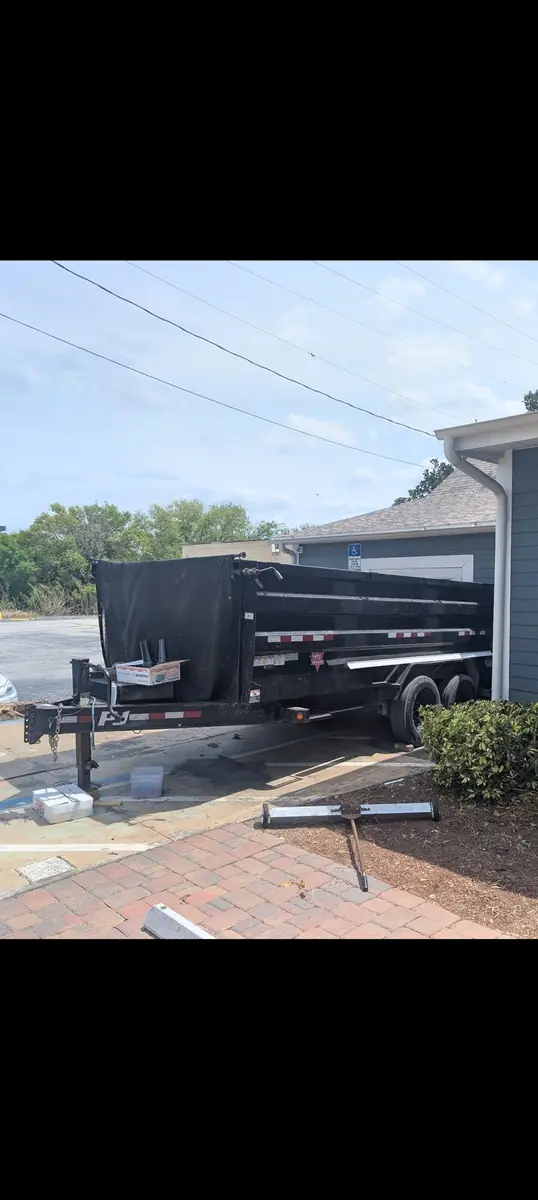
After a major storm, county and city crews typically run special bulk debris pickups, but they can take weeks to reach every street, so stage your pile smartly in the meantime. Keep vegetative debris (branches, palm fronds) separate from construction debris (drywall, fencing, flooring) and household trash; mixed piles get skipped. If a room needs to be gutted down to the studs because of flooding, that's really a post-construction cleaning job once repairs are done. And if the debris pile is bigger than your trash cans can handle, a hauling crew like the one on our real cleanout cost breakdown can clear it in a single visit instead of waiting on the county.
Mold is the single biggest risk after a Florida storm because our humidity does the rest of the work for it. Run dehumidifiers and fans continuously in any room that took on water, keep interior doors open for airflow, and pull baseboards or drywall that stayed wet more than 24 hours; they rarely dry out from the inside. For the full room-by-room routine, including AC and duct checks, see our guide on how to stop mold and mildew in a Florida home.
Heavy debris, water-damaged interiors, and whole-home disinfection are a lot to handle alone, especially when you're also dealing with insurance calls and getting the rest of daily life back on track. A trained crew with the right equipment gets it done quickly and safely, and knows the difference between a wall that can be cleaned and dried versus one that needs to come out.
Orchid handles post-storm deep cleaning, disinfection, and debris removal for homes and businesses across Polk County. We can usually respond same-week.
Get cleanup help →More cleaning tips
→ Spring Deep Cleaning Checklist for Florida Homes
→ Post-Construction Cleaning Checklist for New Builds & Renovations
→ How to Stop Mold & Mildew in a Florida Home
→ How to Get Streak-Free Windows Every Time
→ How to Deep Clean Your Kitchen Appliances
→ Pressure Washing Guide for Florida Homes & Businesses
→ How to Clean AC Vents and Improve Indoor Air Quality
→ How We Train and Vet Our Cleaners
→ Back to all cleaning tips