Cleaning Tips · Windows
How to get streak-free windows comes down to three things: the right tools, the right solution, and the right timing. Get those in order and your glass comes out invisibly clear: no smears, no haze, no do-over. Here's exactly how our crew does it, including the Florida-specific quirks (hard water, humidity, blazing sun) that trip up most DIY attempts.
By Joey Maher, Owner, Orchid Cleaning Service, Winter Haven, FL.
Reviewed for quality by Beverly Hughes, Commercial Operations Lead.
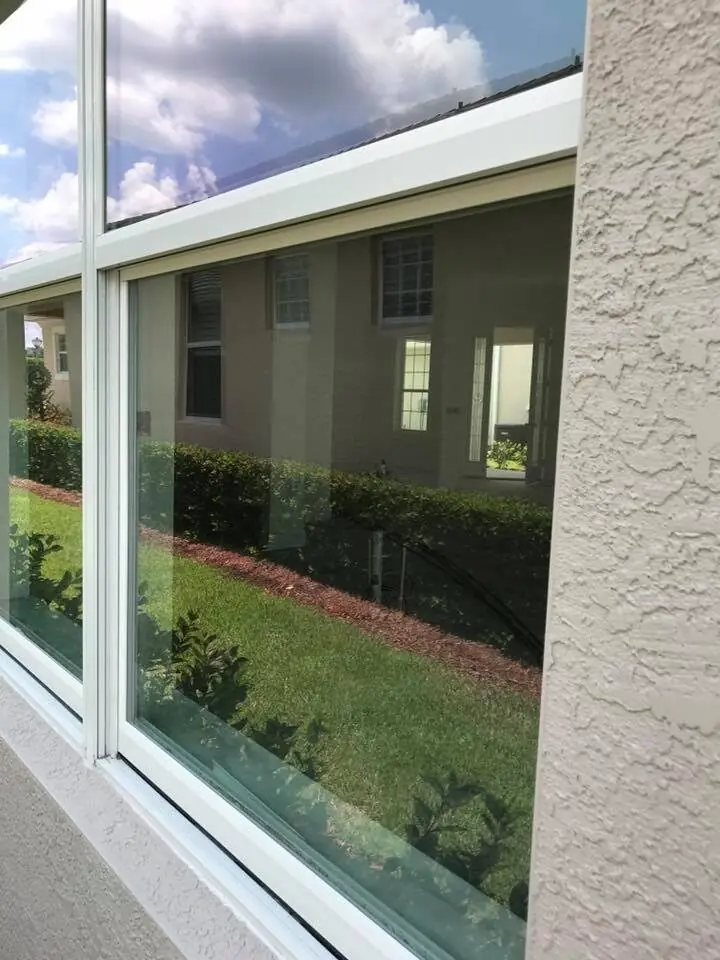
Before the fix, the cause. Streaks are almost always one of four things: leftover soap film that never got wiped away, lint shed by paper towels or newspaper, cleaner that flash-dried in direct sun before you could buff it off, or mineral deposits from Florida's hard, limestone-fed water supply. Fix the tool, the solution, and the timing, and every one of those causes goes away on its own, which is why window cleaning is one of the most-skipped-but-easiest wins in a regular deep cleaning visit.
Paper towels and newspaper leave lint and break down on glass. They're the single most common reason a DIY window job looks cloudy in bright sun. The pros use a squeegee for the main pane and a flat, lint-free microfiber for edges and detailing. A good squeegee (rubber blade, not plastic; plastic skips and drags) is the single biggest upgrade you can make. Keep a second dry microfiber in your back pocket for the frame and sill, so you're never using the same cloth twice.
You don't need much: a few drops of dish soap in a bucket of warm water, or one part white vinegar to ten parts water for hard-water spots, common on homes around Lakeland and Winter Haven, where well and municipal water alike tend to run mineral-heavy. Skip heavy commercial glass sprays; their added polymers and fragrance oils are exactly what leaves the hazy film people mistake for "clean." If a window has tint (common on Florida-facing storefronts and sunrooms), stick to ammonia-free solutions so you don't cloud or lift the film.
Never clean windows in direct midday sun. The heat flashes your solution dry before you can squeegee it, and that's what bakes in streaks. Early morning or an overcast afternoon is ideal, and a cooler pane gives you more working time. Florida's humidity cuts both ways: on muggy mornings glass can stay damp longer than you'd expect, so give it an extra minute before your final buff, and steer clear of the hour right before a typical summer afternoon storm rolls in, since wind-blown dust and rain spots will undo the work fast.
For most homes, interior glass twice a year and exteriors once a quarter keeps things looking sharp between deeper cleans. More often if you're near a construction zone, a busy road, or backing up to a lawn that gets mowed weekly. Storefronts and commercial glass are a different animal: high-traffic entrances usually want weekly or biweekly attention to stay presentable, which is why it's a standing line item on most of our commercial cleaning contracts.
Interior windows and ground-floor exteriors are a great DIY. Second-story exteriors, large storefronts, and screen enclosures are where ladders, water-fed poles, and a trained crew earn their keep, both for the finish and for safety. If you'd rather skip the ladder altogether, professional window cleaning is usually bundled into a standard visit rather than priced as a stand-alone add-on; see typical ranges on our house cleaning prices page.
Pollen season (roughly February through April across Central Florida) is the other wildcard: a fine yellow-green film settles on glass, screens, and sills fast, and it re-streaks a freshly cleaned window within days if you don't also rinse the screens and sills. If windows are just one item on a longer spring punch list, our spring deep cleaning checklist walks through the rest of it room by room.
We handle interior and multi-story exterior window cleaning for homes and commercial properties across Polk County, safely, and streak-free.
Get a free quote →More cleaning tips
→ Spring Deep Cleaning Checklist for Florida Homes
→ Post-Construction Cleaning Checklist for New Builds & Renovations
→ How to Stop Mold & Mildew in a Florida Home
→ How to Deep Clean Your Kitchen Appliances
→ Pressure Washing Guide for Florida Homes & Businesses
→ How to Clean AC Vents and Improve Indoor Air Quality
→ Hurricane Prep & Cleanup Guide for Polk County Homes
→ How We Train and Vet Our Cleaners
→ Back to all cleaning tips